
The European Climate Law provides for the definition of a decarbonisation target by 2040 for the European Union.
In response to the deregulation trend in the United States, what economic policy can Europe pursue? Discover our 2026 overview of European ESG regulations, with a focus on the main implications for decarbonisation and competitiveness across the continent.
First part of the 2026 European sustainability regulatory panorama: amendment of the European Climate Law
Since 2021, the European Climate Law has set the objective of achieving EU climate neutrality by 2050. It established a first milestone of reducing net greenhouse gas emissions by 2030, giving the Union five years to cut emissions by 55% compared to 1990 levels.
Beyond 2030, the law foresees setting a 2040 decarbonisation target, a key step toward climate neutrality by 2050.
In July 2025, the European Commission presented its proposed 2040 target and amendments to the Climate Law, introducing unprecedented flexibility by allowing the use of international carbon credits.
The Commission introduces unprecedented flexibility by opening up the possibility of using international carbon credits.
Europe’s 2040 ambition
The Commission proposes a –90% reduction in net greenhouse gas emissions by 2040, relative to 1990. This target is intended to guide EU climate and energy policy beyond 2030.
It is complemented by a mandate for the Commission to continue developing the EU’s decarbonisation programme.
Nationally Determined Contributions for 2035 must also align with this objective.
Under the Paris Agreement, Member States agreed only on an indicative 66.25%–72.5% emissions reduction by 2035, covering all sectors and all greenhouse gases.
How to reach the 2040 decarbonisation goal?
The amendment brings greater flexibility.
Greater latitude given to state and economic actors to decarbonise
Unlike the 2030 and 2050 targets, which must be achieved exclusively through domestic action, the 2040 target would partially rely on international carbon credits.
Thus, achieving –90% by 2040 would rely 85% on EU domestic reductions and 5% on external efforts.
Future eligibility criteria for carbon credits
Only credits aligned with Article 6 of the Paris Agreement will be eligible.
Opening of the carbon market to more asset types
The carbon market could be revamped to reduce decarbonisation costs, considering the economic, geopolitical and security context.
Additional flexibilities include :
- use of permanent national removals under the EU ETS,
- greater flexibility across sectors, allowing one sector to compensate for another.
Europe has established a framework for achieving climate neutrality.
A competitive economy, a prerequisite for climate neutrality
Europe has established a framework to achieve climate neutrality. Reaching the 2040 target depends on an economy capable of investing in carbon capture and storage technologies.
Concerns raised by NGOs
In a detailed report, the US NGO Partnership for Policy Integrity criticizes the Commission’s proposal, highlighting :
- overreliance on carbon capture and storage technologies,
- uncertainty of achieving permanent removals,
- insufficient modelling of alternatives.
Other NGOs and think tanks sounded the alarm after the amendment proposal was published. In an open letter, 152 stakeholders urged the Commission to abandon the use of carbon credits to achieve the 2040 target, arguing that domestic action alone could suffice.
Next steps
The Commission’s proposal was submitted to the European Parliament and the Council for adoption under the ordinary legislative procedure.
On November 13, 2025, the European Parliament voted strongly in favor of the -90% target.
On December 10, 2025, Parliament and Council reached a final compromise on a final version. The agreement must be formally validated by both bodies.
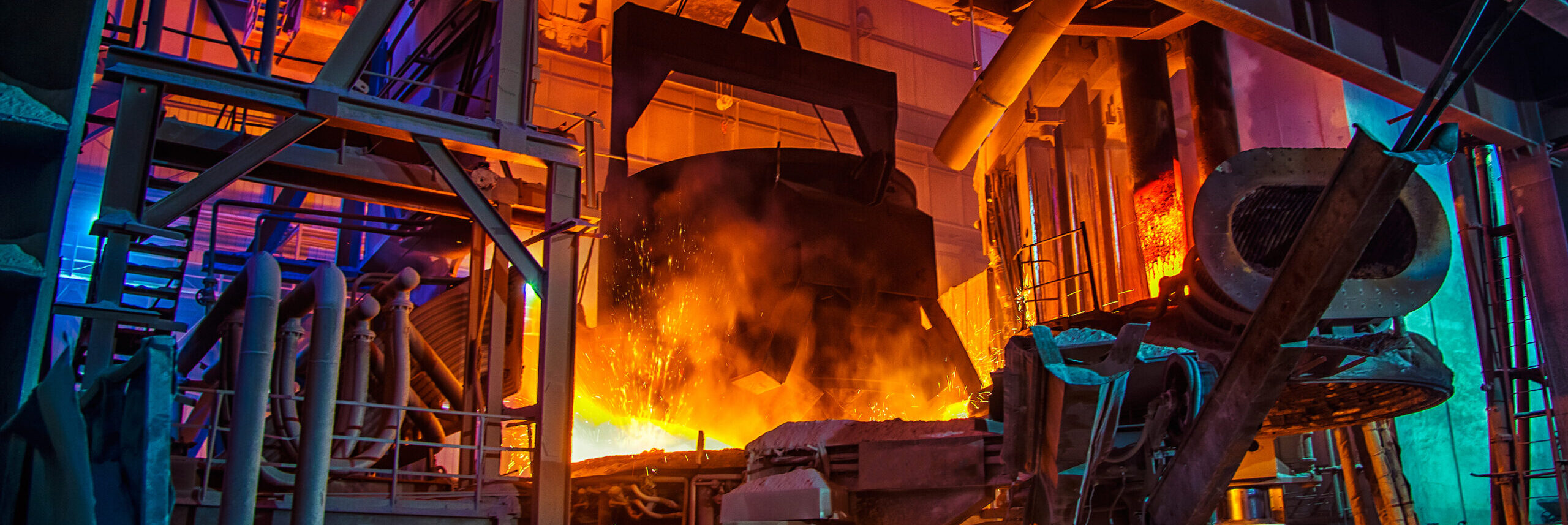
The Clean Industrial Deal aims to reduce emissions from heavy industry and strengthen Europe’s energy independence.
Second part of the overview of European sustainability regulations to watch out for 2026: the implementation of the Clean Industrial Deal
In September 2024, former European Central Bank President Mario Draghi submitted a report to the Commission on Europe’s competitiveness, diagnosing a severe economic and technological decline and offering 170 recommendations to restore global leadership.
Guided by these insights, the EU unveiled its Competitiveness Compass in January 2025, aiming to revitalise growth and rebuild European industrial momentum.
The Compass thus aims to strengthen three strategic pillars:
- closing the innovation gap,
- decarbonising the European economy, and
- reducing dependencies.
The Clean Industry Deal specifically targets the decarbonisation pillar.
A joint decarbonisation and competitiveness plan
The Clean Industry Deal aims to decarbonise industrial sectors while boosting their global competitiveness.
As part of the Green Deal, it combines climate transition with economic resilience.
The Commission points to high energy costs and rising global competition.
The CID intends to turn decarbonisation into a growth lever, reducing emissions from heavy industry and strengthening Europe’s energy independence.
It focuses on:
- energy‑intensive industries (steel, metals, chemicals),
- clean‑tech sectors,
to activate six competitiveness levers.
The Clean industrial Deal specifically targets energy-intensive industries energy-intensive industries (steel, metals, chemical products) and the clean-tech sector to act on six levers of competitiveness.
Key regulatory axes to watch in 2026
Ensuring affordable energy
Since the cost of electricity is higher in Europe, ensuring affordable energy is central to the challenge of competitiveness.
In February 2025, the Commission therefore presented the European Action Plan for Affordable Energy. This plan aims to reduce energy bills for industry, businesses, and households through:
- expanded clean energy,
- electrification,
- completion of the internal energy market,
- reduced fossil fuels dependence.
Stimulating demand for “clean” products
The European Union is counting on the Industrial Decarbonisation Acceleration Act to increase demand for clean products manufactured in Europe.
Currently being drafted, this legislation will introduce criteria for sustainability, resilience, and European manufacturing in public and private procurement.
Financing the clean transition
The CID creates an Industrial Decarbonisation Bank within the European Innovation Fund, backed by €1 trillion for clean-tech development.
Reducing dependence on critical raw materials
Through the Critical Raw Materials Act and the Circular Economy Act, the European Union seeks to secure essential resources and expand recycled materials markets.
Acting on a global scale
To ensure European competitiveness, the Clean Industry Deal relies on:
- Clean Trade and Investment Partnerships,
- simplification and strengthening of the CBAM,
- improved trade-defence instruments.
Unifying the skills and employment market
The Clean Industry Deal provides for the establishment a skills union to promote workers’ access to the necessary skills and access for businesses to talent.
Support of €90 million through the Erasmus+ program will also support European education and training programs.
The Clean Industrial Deal could enable the EU to compete with the United States and the financial incentives of its Inflation Reduction Act.
Decarbonisation as a lever for competitiveness in the face of American protectionism
We see the Clean Industry Deal as the European Union’s political response to the US Inflation Reduction Act (IRA).
The 2022 IRA aimed to strengthen US industrial competitiveness in strategic low-carbon sectors by stimulating the production of clean technologies and encouraging investment in the energy transition. The current administration has changed its technological choices and energy priorities.
Europe appears to be maintaining its course, despite a shifting U.S. policy landscape.
Regulatory simplification is an essential aspect of the plan to strengthen European competitiveness.
Third part of the overview of European sustainability regulations for 2026: regulatory simplification
The European Commission is implementing a wide-ranging project to reduce the administrative and regulatory burden on European businesses.
This is a top priority in the 2024–2029 Strategic Agenda and in the Budapest Declaration on European competitiveness.
The goal is a 25% reduction in reporting and compliance costs, and 35% for SMEs by 2030.
Since February 2025, the Commission has presented six “omnibus” simplification proposals, affecting: sustainability, EU investment, CAP, mid‑caps, digitalisation, defence, chemicals.
Impact of “omnibus” measures on sustainability reporting
Early 2025, the first omnibus bill aimed to simplify Green Deal regulations (CSRD, Taxonomy, CS3D, CBAM).
A key measure, the “stop the clock” directive adopted in April 2025, includes:
- a 2‑year delay for CSRD application (waves 2 & 3),
- a 2‑year delay for the first phase of CS3D.
Additional simplifications, expected by early 2026, include:
- reducing the number of companies under CSRD (higher thresholds),
- an EFRAG technical mandate to simplify ESRS.
The omnibus measures also propose changing the Taxonomy applicability threshold, with shorter, lighter reporting requirements:
- 64% fewer data points for non‑financial companies,
- 89% fewer data points for financial institutions.
In September 2025, the Council adopted a regulation simplifying the CBAM, including its reporting and emissions‑data requirements.
Conclusion
The review of European sustainability regulations for 2026 presents a delicate balancing act.
The European Green Deal has launched a continent‑wide transformation, and the success of its climate and industrial pillars will be crucial to restoring European competitiveness.
About Positivéco
At Positivéco, we see the new national and international regulations on CSR as an opportunity for positive growth.
Our aim: to apply financial and commercial skills to structure projects outside the traditional silos.
Since 2009, we have been supporting climate investment and development aid projects; we evaluate CSR policies and carry out extra-financial reporting for our clients. Positivéco advises financial institutions, public actors, listed and non-listed companies.
Request a callback today and discover how you can meet the new CSR requirements while serving the company’s project.

Who we are
With Positivéco, your success is our priority. Since our conception, we have always applied financial and commercial expertise outside the traditional silos, to structure successful and impactful client projects. This improves the visibility of your activities for enhanced profitability and increases your financial valuation.










Contact us now!